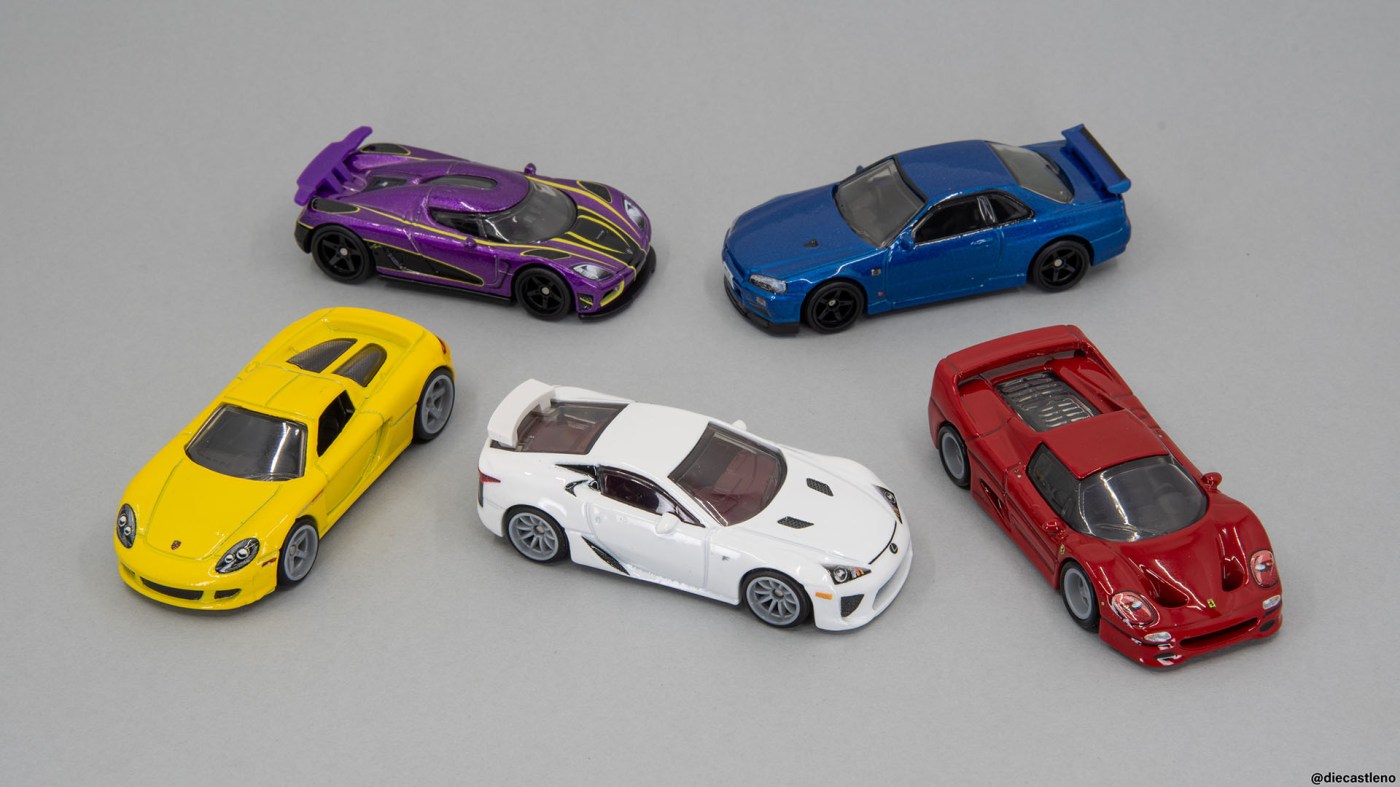
I’ve made no secret of my belief that Hot Wheels is incapable of making a compelling Exotic Envy set. Despite the enormous potential of a theme based entirely around the exotic cars that occupy our dreams and adorn posters on bedroom walls, Hot Wheels has consistently filled the Exotic Envy sets with several pegwarmers. So how is it possible that Hot Wheels launches a new series called Timeless Icons, in which 4 of the 5 models are exotic cars far more enviable that we typically see in the Exotic Envy sets? The only car in this new set that wouldn’t typically be considered exotic is the new R34 GT-R V-Spec II (and given the values of V-Spec GT-Rs these days, you could definitely make an argument that it should be considered an exotic as well).
Perhaps the Exotic Envy name was just cursed, because this set that’s jam-packed full of exotic cars looks set to be the most exciting Car Culture set of the year, at least if the hype on the internet is anything to go by.

To me, the star of this set is without a doubt the new Lexus LFA. It boggles my mind that Lexus’s flagship supercar was largely absent from the diecast world for so long. Over the last couple years, a few premium diecast brands finally made models of the LFA, but given my preference for the toy-like models from Mattel, I was most excited by Matchbox’s decision to make an LFA for the Collectors line. Sadly, that casting didn’t turn out very well, so I was left hoping Hot Wheels would make an attempt at replicating this legendary supercar. Thanks to fan-favorite designer Ron Wong, that day has finally come. Boy, did they ever deliver.
The LFA is notoriously difficult to translate into 1/64 scale, and this Hot Wheels model has impressively accurate proportions considering its budgetary constraints. It looks low and wide, while still being a little on the big side for a supercar, as it should be. The detailing is spot on, with nothing but a realistic rear license plate missing. These gray 10 spokes are not a perfect match for the split five-spoke wheels that the real LFA wears, but they’re close enough to look right and the fitment is spot on. Usually Hot Wheels models have some side-to-side play in their axles, requiring careful positioning when taking pictures, but these wheels have barely any lateral movement.
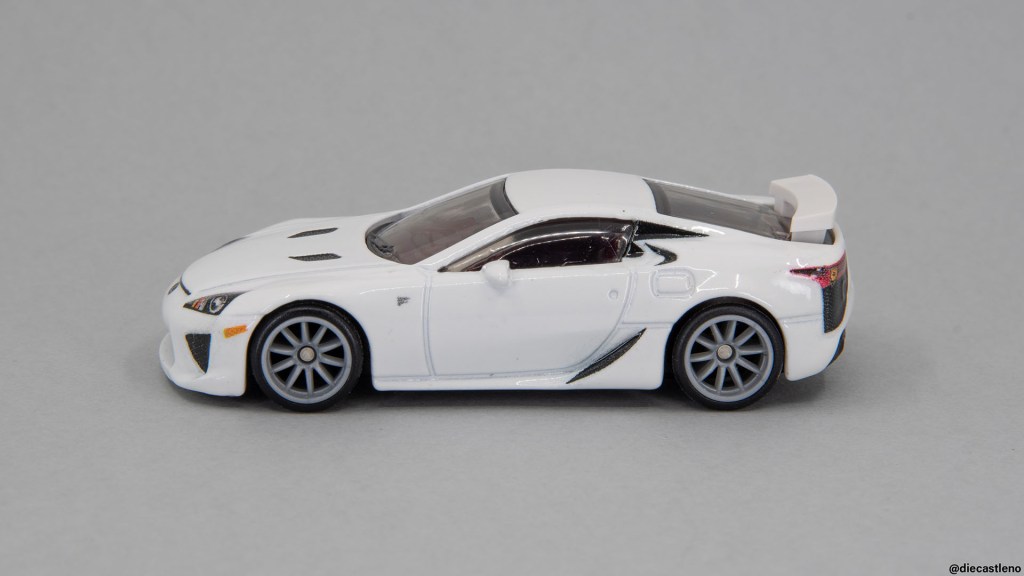
One of the most challenging sections of the LFA to replicate is the rear quarter window. Ron Wong wrote on Instagram about his attempts to make it part of the LFA’s clear plastic window piece, but it ultimately proved not possible. Rather than just leaving it white like Matchbox chose to, Hot Wheels printed that window black, which preserves the car’s bodylines and is actually a far more passable optical illusion that I expected when I first saw pictures. Hot Wheels also deserves credit for including mirrors on this casting, even if they aren’t as stunning as the LaFerrari’s mirrors.
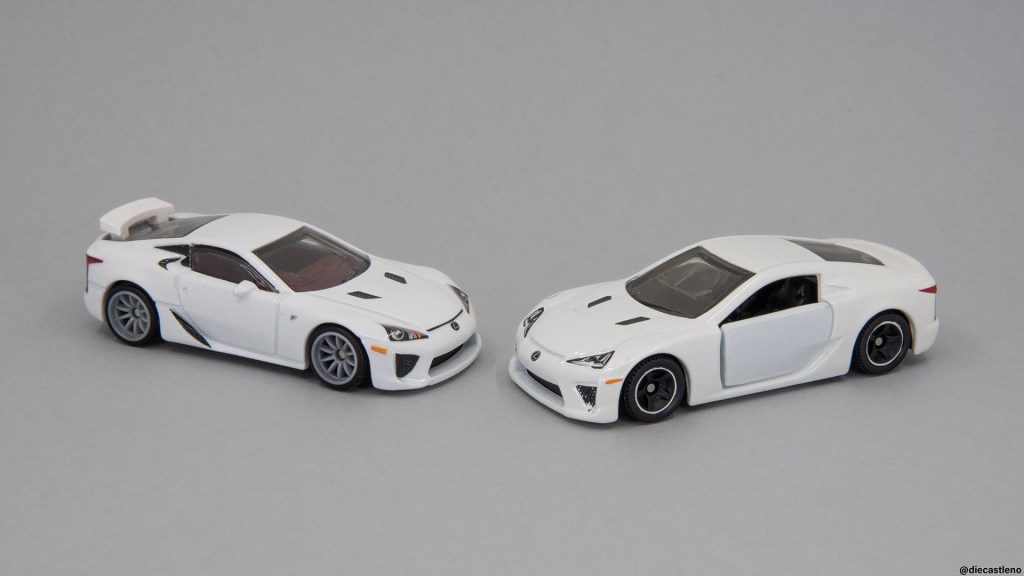
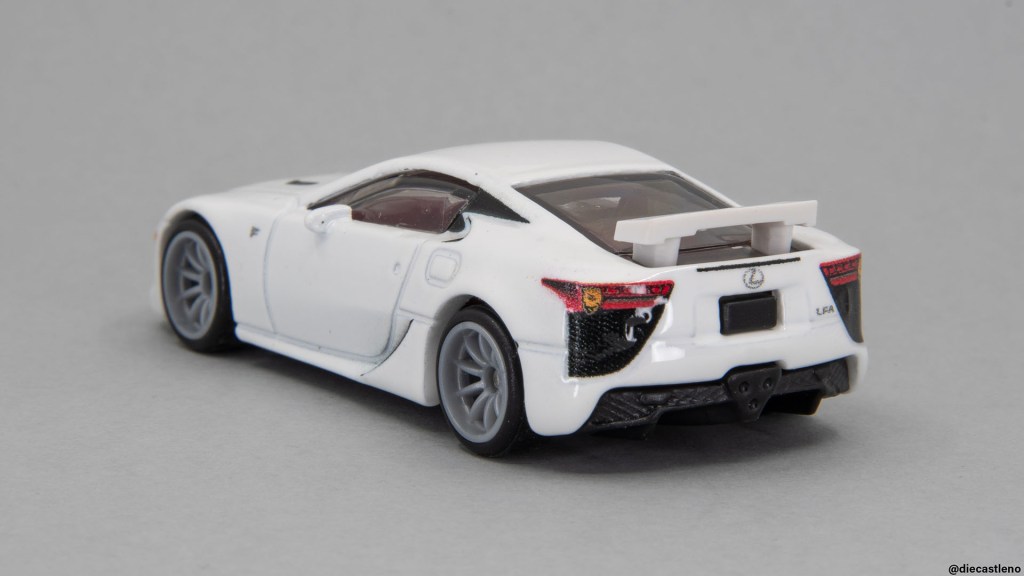
While I was initially disappointed that Hot Wheels chose to model the LFA in the same white that Matchbox used, I’m pleased to see that they have differentiated their casting by modeling the LFA’s deployable rear spoiler in the up position. That little detail really makes this casting stand out, and I think it looks incredibly cool, even if the color match on the wing isn’t perfect. The rest of the LFA’s rear looks suitably boxy, with plenty of detailing in the rear vents and brake lights that wrap properly around onto the sides. The way the black base section locks into the body of the LFA by forming a contrasting-color license plate is clever, though I would have liked to see a printed plate still.

Speaking of missing detailing, how did the LFA’s triple exhaust tips not get silver detailing? They are undoubtedly one of the most iconic parts of the LFA’s design, and I’ve grown accustomed to (and perhaps spoiled by) the detailed exhausts on many of Hot Wheels’ recent premium models.

Still, let’s give Hot Wheels credit where it’s due for finally bringing us a good Lexus LFA casting! As cool as this white version with a red interior is, I hope we don’t have to wait too long for some recolors of this casting, as I’ve always loved the look of the LFA in yellow.
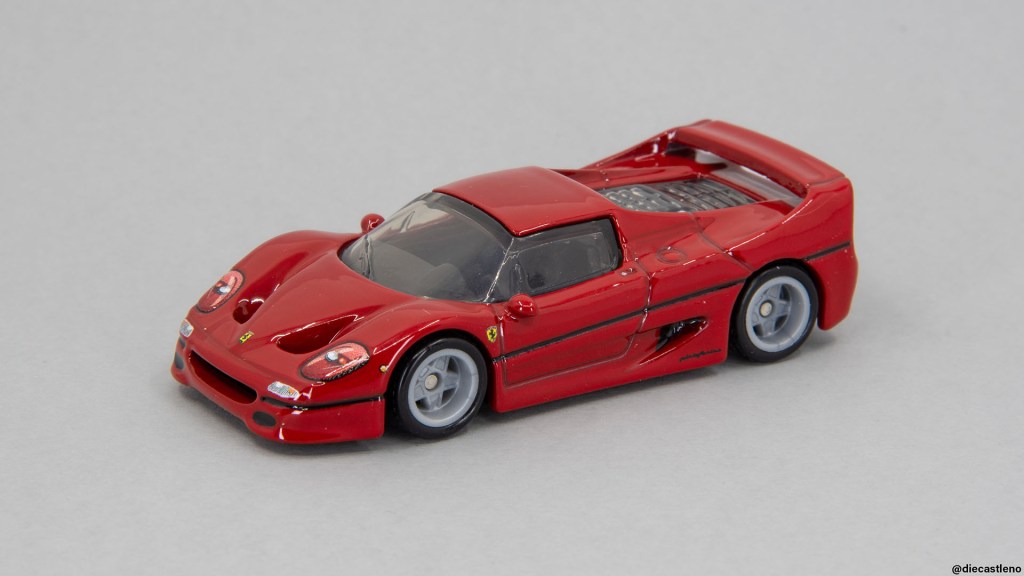
The LFA might be my favorite model of the set, but the rest of the collector community seems to be absolutely obsessed with this new F50. That’s not too surprising, given the F50’s legendary status as a bedroom poster car and the excitement around Ferrari’s return to the Hot Wheels lineup. Since I grew up in the Enzo era, the F50 has never been the object of my desires, but that doesn’t mean this isn’t a cool little model. As with the recent LaFerrari casting, its placement in the premium line means this F50 gets full printed detailing on all sides, which allows for cool details like the black trim piece that runs from the front bumper all the way to the brake lights. There are other cool details as well, like the headlight prints that show the color-matched red headlight housings that the F50 is known for.
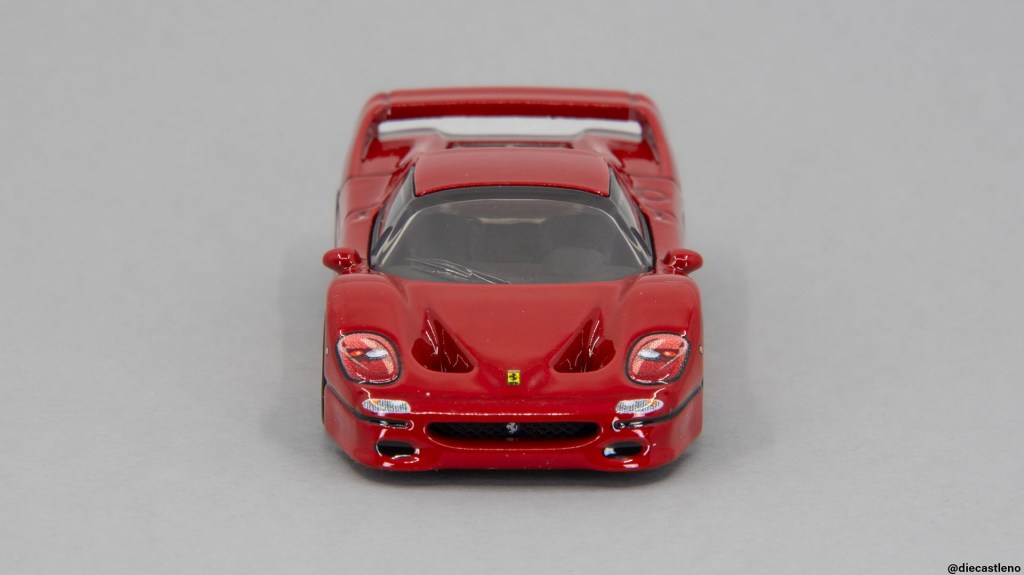
This new casting does have some flaws though. At least to my eye, it looks a tad chunky, especially in the front end, and the front grille sits too deep behind the bumper. I do like the use of matching sized wheels on both axles, which looks far more realistic than the exaggerated staggered wheel setups that so many previous diecast Ferraris have suffered from.

The rear is the star of the show with this F50, with none of the weaknesses that the front has. The large mesh grille looks awesome, with plenty of texture and perfectly aligned brake light prints. The F50 uses the same license plate technique to secure the base that the LFA uses, and this F50 even gets silver exhaust tips!

Much like that LFA, the Ferrari F50 has been frustratingly hard to come by in 1/64 scale, so I totally understand the excitement around this new premium casting. It’s great to have this legendary car represented in the Hot Wheels lineup…now we just need an Enzo in the premium line!
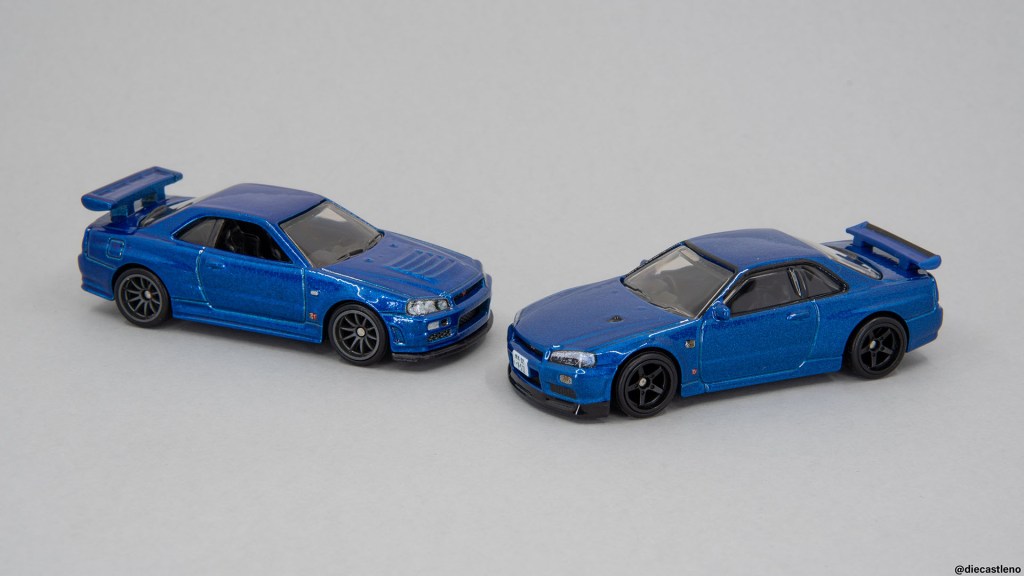
One car that has definitely not been hard to come by in 1/64 scale is the R34 Nissan GT-R. If anything, the R34 GT-R has been the defining car of 1/64 collecting for the last decade, and the Hot Wheels premium version has consistently been among the most popular. All of which makes it a little surprising that Hot Wheels chose to use one of their precious few new casting slots to make another R34 GT-R…
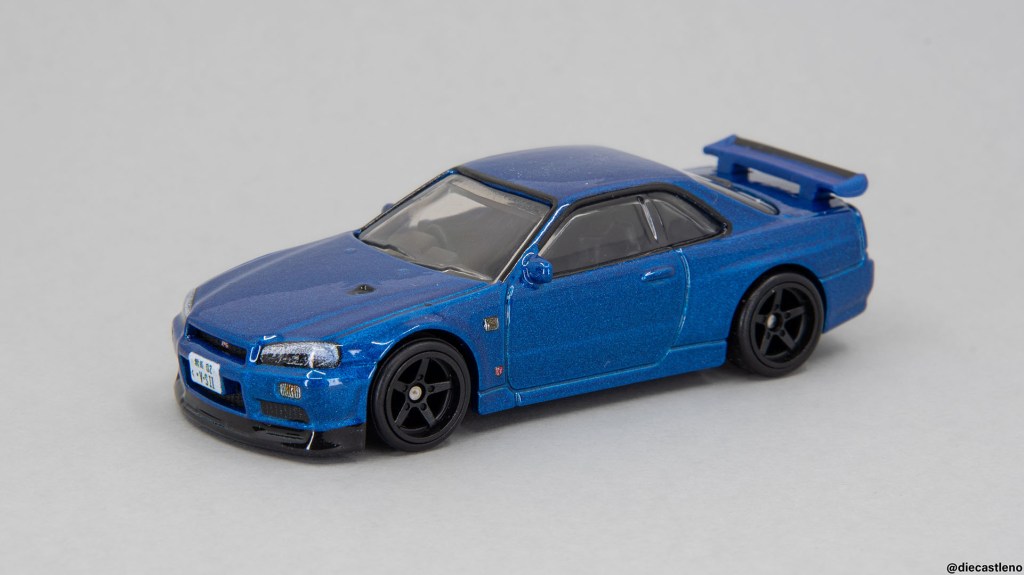
Mind you, this new R34 is the V-Spec II version, so it isn’t exactly the same car, but it’s still unusual to see multiple trim levels of a single car from Hot Wheels (usually that’s the domain of MiniGT). I suppose there is an argument to be made that the V-Spec II is a substantially different car – akin to the difference between the 911 Carrera T and the GT3 – but there’s no denying that these two GT-Rs look awfully similar to each other.

To Hot Wheels’ credit, they didn’t just slightly modify the details on the existing GT-R casting. This new V-Spec II features a wide range of updates and improvements, including a lower ride height, a more sloping hood, and a substantially lower spoiler at the back. Many of the details are sharper and the badges are a bit smaller, resulting in a casting that feels more like it was made for the premium line, rather than being a mainline casting adapted for premium use, as the previous R34 casting was.
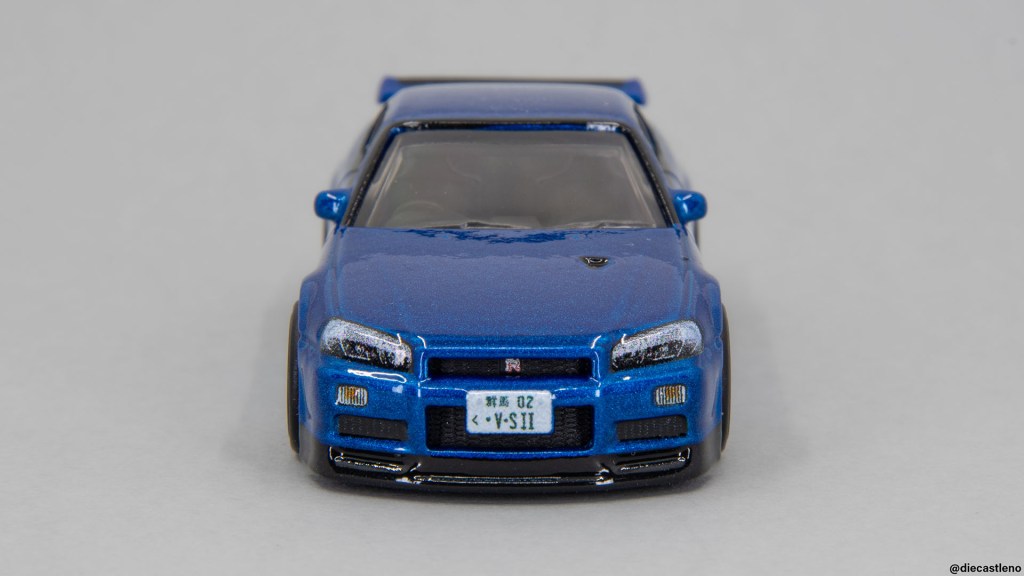
I can’t find any fault with the detailing on this model – Hot Wheels knocked it out of the park! The front features the expected headlights and turn signals, but it also features rarer details like a realistic front license plate (Japanese-style, naturally) and a miniscule GT-R badge on the grille. The V-Spec II features a black section at the bottom of the bumper, and I’m surprised to see it printed black rather than relying on the black base to form that section. The construction technique is a tad unusual, but the end result looks great!

Likewise, the detailing at the back is phenomenal! The badges are all much smaller than the previous R34 casting, but the printing alignment is still spot-on. The brake lights are impressively 3-dimensional and there’s even a reverse light and rear foglight flanking another realistic license plate. This is the kind of detailing I wish we saw on all premium models from Hot Wheels!

Did we really need another R34 from Hot Wheels? Probably not, but I can’t argue with the resulting casting – it looks awesome and I’m glad to be able to add it to my collection.

Unlike the R34, the Carrera GT casting is showing its age and probably could have used a refresh. This is the first time the Carrera GT has seen premium use since the old Speed Machines line back in 2010 (where it was also released in yellow, interestingly enough). The casting itself dates back all the way to 2006 where it debuted as a mainline, and while it was probably the best mainline casting in existence in 2006, casting techniques have come a long way in the nearly two decades since. As a result, this still-cool casting is definitely starting to show its age.
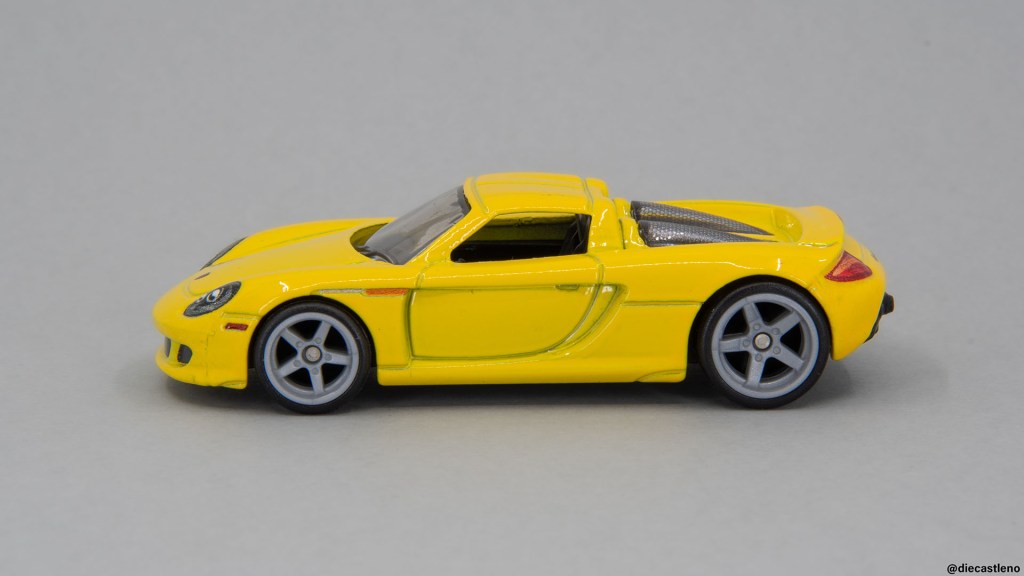
Unlike the majority of the Timeless Icons, the Carrera GT uses a staggered wheel setup, which immediately betrays this casting’s age. It also lacks side mirrors, there is no gap underneath the wing, and all of the car’s curves feel a bit too flattened.
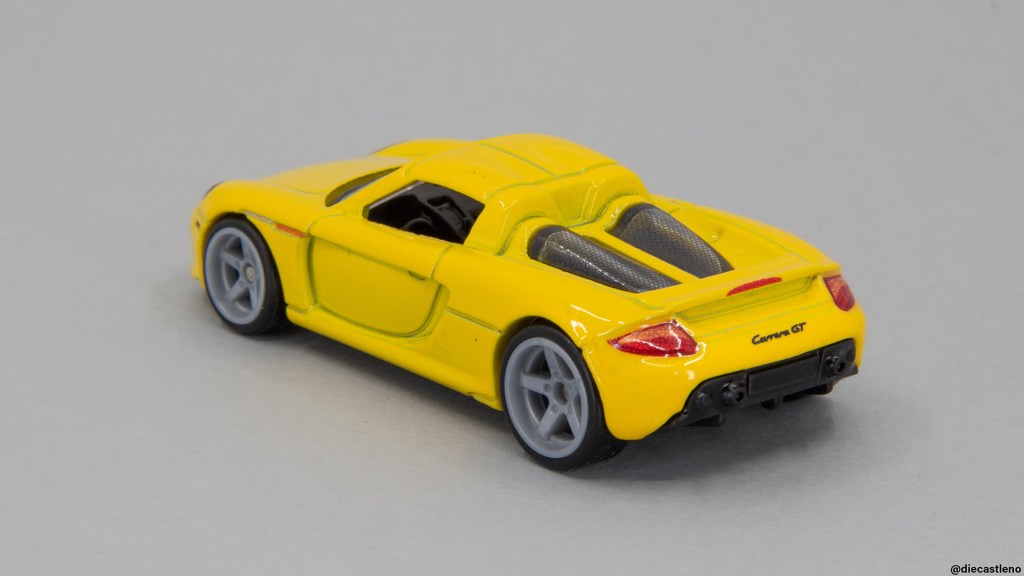
Even so, the Carrera GT is a very cool car (doubtless a Timeless Icon), and it’s good to see the car back in the Hot Wheels lineup. The last time we saw the Carrera GT was in a five pack back in 2017, so I didn’t expect to see it make a return this year! Silver is definitely a more iconic color for the Carrera GT, but this yellow one is very striking, and I’m glad to see it get a stock deco. The deco hasn’t changed much from the mainline version, with the exception of some added black printing for the grilles in the front bumper.

The Carrera GT casting uses the window piece to form the engine covers, which are then printed with a silver mesh. Oddly, the print has been modified for this new version to be a bit more see-through, even though there isn’t much engine detailing to see anyway. Despite the higher detailing budget for the premium line, the rear window did not get a black print to make it look like a window, which is a bit disappointing.
The rear detailing is nearly identical to the mainline version, save for the addition of a third brake light on the spoiler. As I look at that spoiler, I can’t help but think that if Hot Wheels had reworked this casting rather than the GT-R, we probably would have seen a spoiler with an air gap underneath it, similar to the new F50 casting.

Even taking its flaws into consideration, the Carrera GT is an absolutely iconic car that easily deserves to have a spot in a set like this. I wish Hot Wheels had done more to modernize the casting for its comeback, but I’m still glad to see it return.

Which brings me to the weakest link in the Timeless Icons set: the Koenigsegg Agera R. To put it mildly, I do not like this casting. The proportions are so far off and cartoonish that it barely even looks like an Agera. The wheelbase is too short, the windows are far too small, and the vent in the side is almost comically shallow, to name just a few of its shortcomings. I discussed this casting at length in my recent feature on the new CCXR – which is also the reason why I’m so disappointed to see the Agera in this set. The new CCXR casting is everything this Agera isn’t. It’s accurately proportioned and looks great parked among the other Hot Wheels supercars, and I would have much rather seen it get a new recolor than see this Agera R return.

It’s unfortunate that the Agera casting is so bad, because the deco on this example might be my favorite deco that it’s received yet. It’s based on a real Agera livery (Zijin) out of the UAE, though the gold shows as yellow on the Hot Wheels version. This metallic purple and yellow paint job is exactly the right kind of outrageous for a Swedish supercar, and the fact that the deco covers all four sides and the roof is nice to see. Yet the whole time I’m looking at it, I can’t help but think how much cooler a deco like this would have looked on the CCXR…

So where does that leave this set? Even with the disappointment of the Agera R and the cool-but-aging Carrera GT casting, four of this set’s five models are must-haves, which is a far better hit rate than we see from most Car Culture sets. Given the amount of exotic castings in this set, it could even be considered the best exotic set of all time, surpassing all three of the Exotic Envy sets. I think that makes this set easily the best premium set of the year, and the fact that it has three brand new castings is impressive! Even the color choices are great – the white, red, blue, yellow, and purple look great together and give a wonderful variety to this mix. If it only would have used the CCXR casting, it would have been the perfect set. Still, four out of five isn’t bad!
Like what I do? Subscribe so you don’t miss any posts!
 diecastleno.com
Leave a comment