
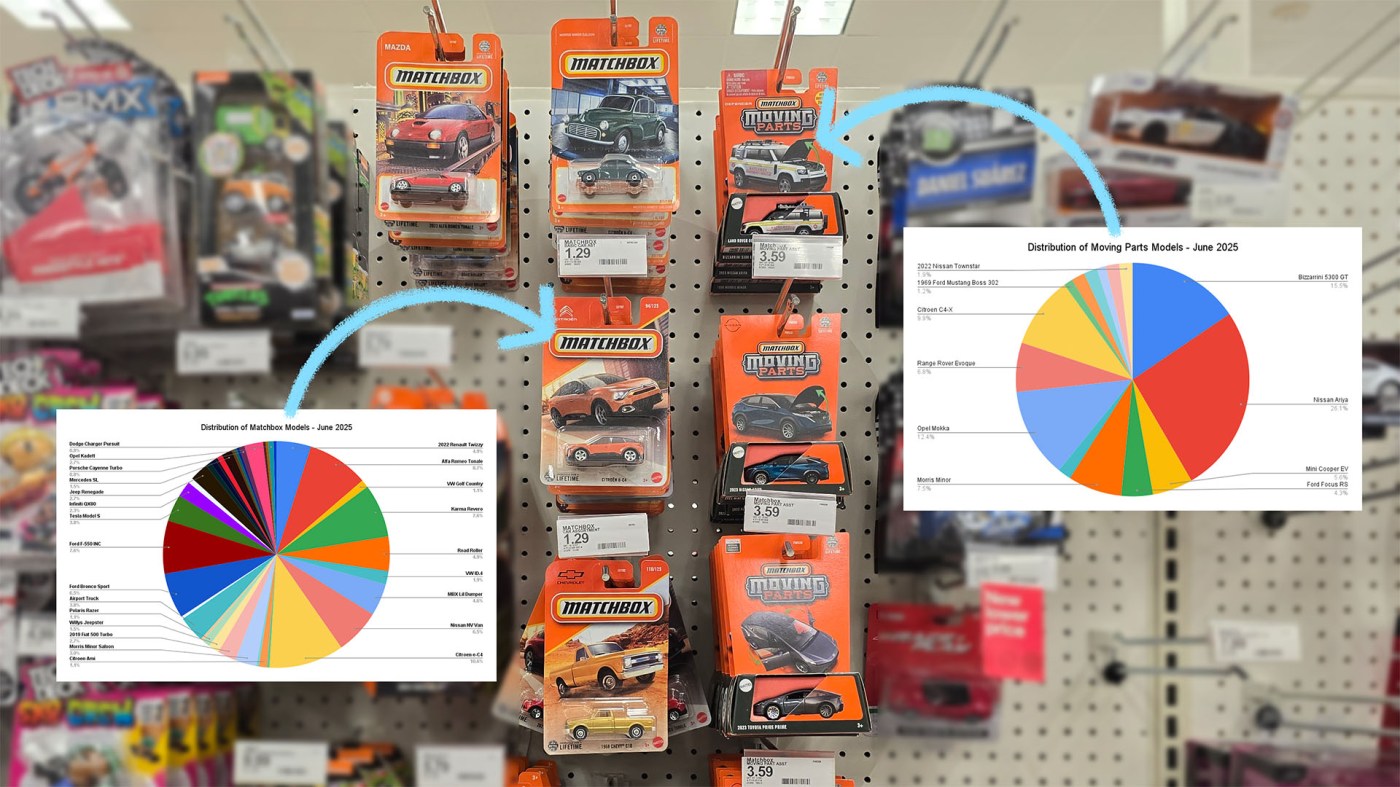
It’s no secret that Matchbox has a pegwarmer problem right now. Countless people online, myself included, have shared anecdotes about the sorry state of Matchbox distribution this year, but I wanted to take a step beyond anecdotal evidence. I decided to take an inventory of all the Matchbox models on the pegs at 10 local Targets and Walmarts to see exactly what’s on the pegs, and what we can learn from it. This is going to be a bit of a statistics deep dive, so feel free to just scroll through the graphs, but if you’re a data-nerd like me, you’re going to love this one.

Let’s begin with the basics: the average big box store in my area has 26 mainline models on the pegs. That number is small next to the number of Hot Wheels mainlines, but since Matchbox mainlines typically only have a couple pegs, it means the pegs were relatively full, so we’re not dealing with a lack of inventory like we were a few years ago.
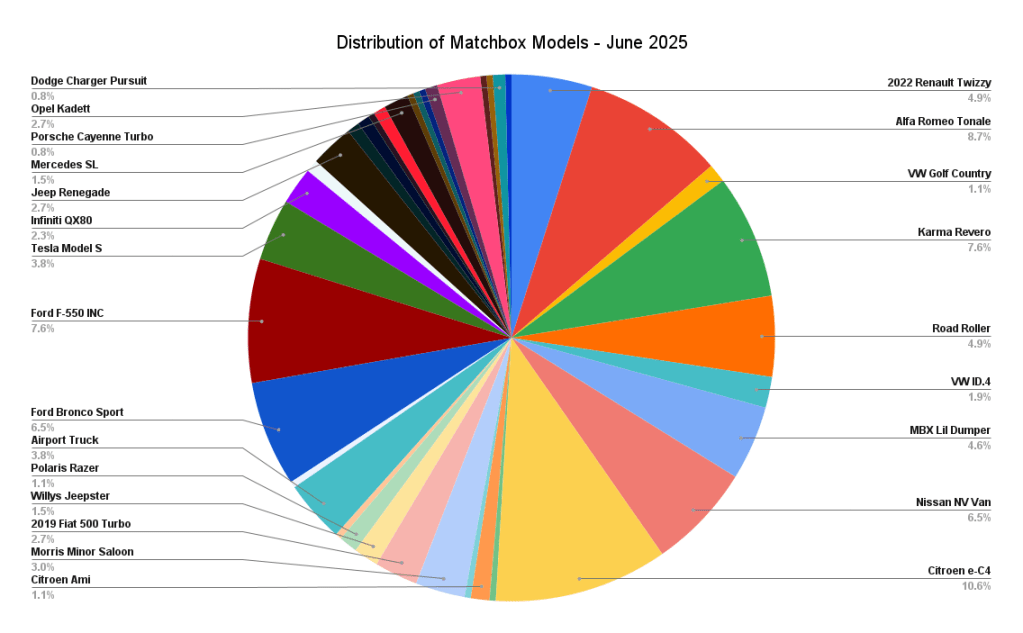
Where things get more troubling is when we look at the distribution of models on those pegs. The most common model was the Citroen e-C4, which made up over 10% of all the models on the pegs, followed by the Alfa Romeo Tonale, Ford F-550, and Karma Revero (formerly the Karma GS-6).
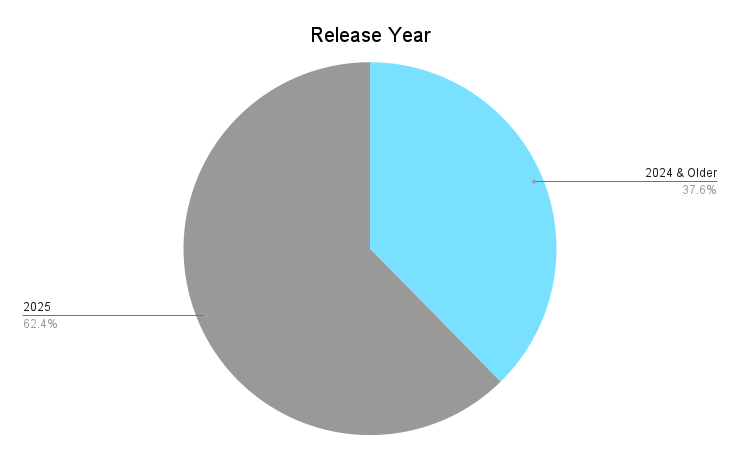
Since Matchbox changed their packaging for 2025, it was pretty easy to count the number of 2024 and 2025 models at each store. In total, nearly 38% of all models on the pegs were 2024 or older. Considering that we’re in June of 2025, that indicates a worryingly slow inventory turnover rate, which big box stores don’t tend to appreciate. All Matchbox mainlines share the same UPC, so the inventory turnover may look artificially better from the rapid turnover of desirable models, but that can only happen if desirable models are on the pegs in the first place.
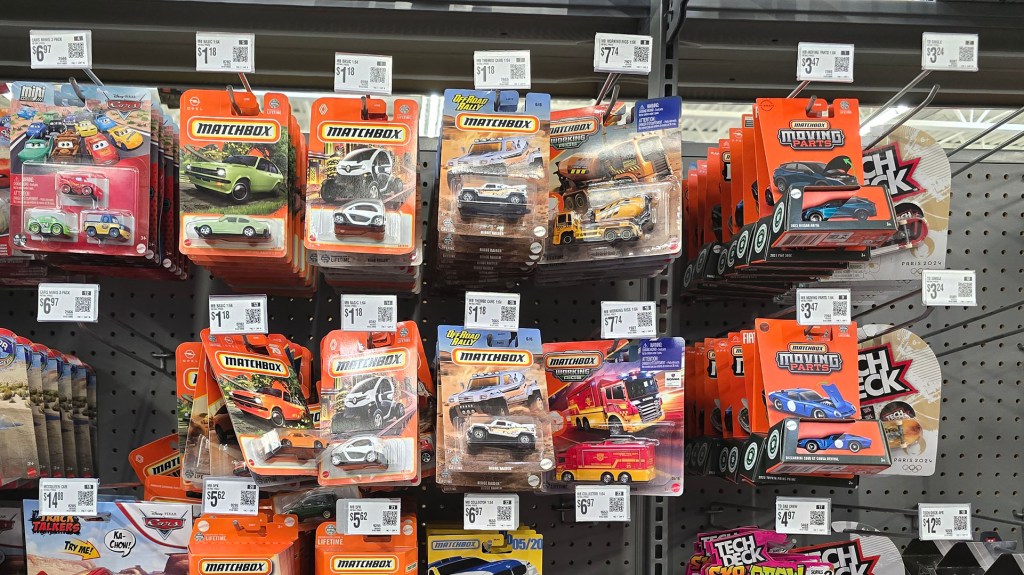
Sadly, that doesn’t seem to be the case, as so many of the models on the shelf are those that don’t tend to appeal to the car enthusiasts that make up the majority of collectors. Matchbox has chosen to focus on EVs, which isn’t inherently a problem, but so many of the EVs in Matchbox’s range are boring crossovers. Of the models I inventoried, a staggering 42% of them were EVs and 35% were crossovers (23% were electric crossovers, for those curious). Despite generic models making up a very low portion of the Matchbox range, they accounted for nearly 14% of all models on the pegs.

The story is similar in the Moving Parts line, though it’s exaggerated by the smaller case counts. The average store had 16 Moving Parts models on the shelf, of which nearly 60% were EVs and 51% were crossovers. Particularly striking was the Nissan Ariya, which has been a pegwarmer ever since its first release yet is inexplicably on its third release in as many years. I found only a few at Walmarts, where the mix with the Ariya was less common, but the average Target had 6.6 Nissan Ariyas! They make up over 26% of all the Moving Parts models on the pegs across 10 stores. Yikes!
What Can We Learn?
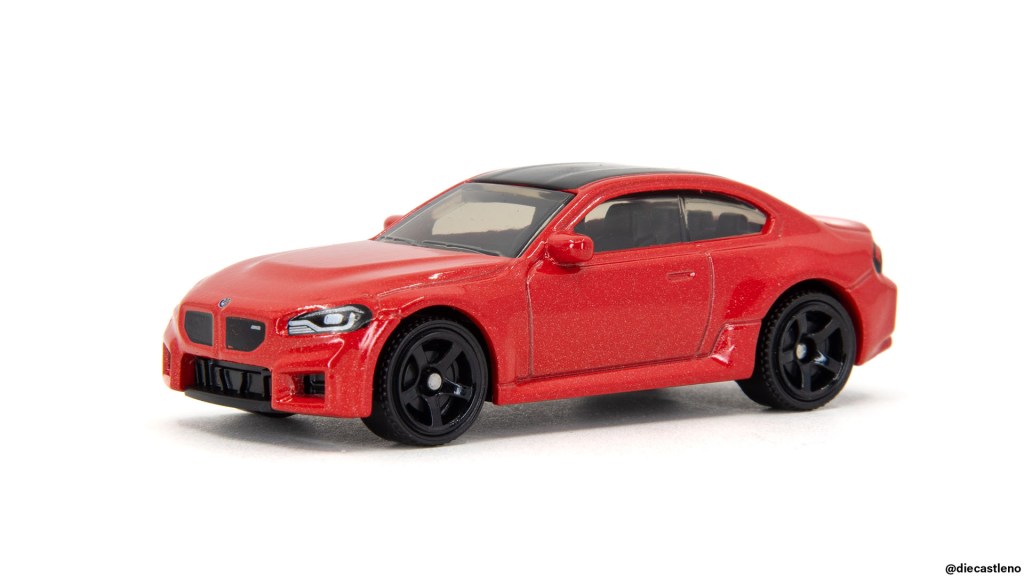
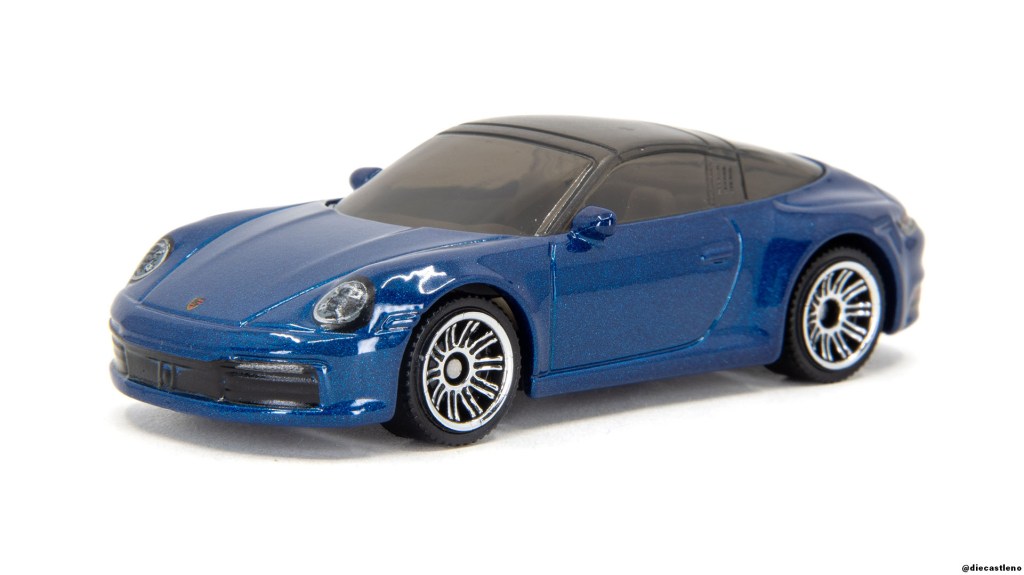
What’s particularly striking about all these graphs is what’s not on them – there’s not a single car that I would consider a “modern enthusiast icon”. Not a single Porsche 911, BMW M2, Integra Type R, or Mercedes AMG can be found warming the pegs. In fact, the sole Porsche I found across all 10 stores and 263 mainline models was a white Cayenne Turbo – probably the least enthusiast-focused Porsche in the current Matchbox lineup. The Moving Parts line has the Ford Focus RS, but I only found 7 in total, and 5 of those came from one store, which can reasonably be considered an outlier. I understand the importance of diversity across the Matchbox product line (otherwise they would produce nothing but Mk5 Supras), but if the cars that appeal to the current generation of enthusiasts are always the first to be purchased, it seems worth catering to that audience.
Of course, I acknowledge that not everyone who collects Matchbox is a car enthusiast, but there’s certainly a significant overlap. For better or for worse, what appeals to most car enthusiasts are sports cars and hot hatches, not electric crossovers. That doesn’t mean EVs can’t exist in the line (I think they should!), but they shouldn’t dominate the line in the way they do today, because they clearly aren’t selling fast enough.

Back to anecdotes for a minute: I will gladly collect a full rainbow of Porsche 911s or Ford GTs, but I only bought the first couple releases of the Audi e-tron or VW ID.4. I don’t mind having an example or two of those EV crossovers in my collection, both for the sake of completion and because they make great background traffic for photoshoots…but I just don’t need that many of them. Yet, they always seem to be first in line for recolors, while I’m still waiting for a recolor of the new Porsche 911 Cabriolet or Moving Parts Bentley Continental. That seems backwards.

The data certainly shows that I’m not the only one. Again, just look at the number of Nissan Ariyas and Citroen e-C4s on the shelf! Neither are bad castings, but the cars they represent simply aren’t that interesting, and the releases are being issued at far too rapid a pace. Imagine how much better of a state the pegs would be in if the 28 Citroens had been replaced by a recolor of the Mk5 Supra instead! Multiply that effect by the 10-20 biggest predictably-pegwarming models each year and the Matchbox brand would be in an excellent growth position. Perhaps they could even expand the mainline to allow for more new models each year!
All this seems obvious to me, and maybe it does to you too, but it’s important to remember that the people working at Matchbox also want the brand to be successful. I did this census of my local pegs not to hate on the Matchbox team, but to try to illustrate a frustration I’ve been feeling with the assortments lately, and to use hard data to back up my gut feelings. Years ago, collectors used the social media hashtag “mymatchboxpegs” to help the team at Matchbox understand the situation at their local stores, and I intend for this analysis to serve as an even more in-depth version of that collective effort. I encourage you to do the same: go to your local stores, find out what’s on the pegs, and share your findings so we can help the Matchbox team hone their product assortments and, by extension, help them deliver more of the models we want to see. Isn’t that what we all want anyway?
 diecastleno.com
Leave a comment